5 Tips For Running an Ethically Sound PR Campaign
Any first-rate publicist can carefully craft and execute a proper PR campaign that will both generate a substantial amount of press exposure, and also help to portray his or her client in a positive light. But, not all publicists will do this without taking a few shortcuts on the way. Sometimes shortcuts can be beneficial – a way to speed up a process that would normally take a longer amount of time. Other times, not so much.
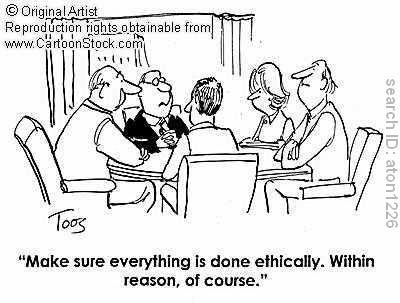
However, just as with any situation in life, ethics are always an important, yet often sidelined topic. Sometimes this is due to a simple oversight. While other times it’s done on purpose, so that one can engage in unethical behavior in order to take a shortcut.
Here are five tips I have prepared on ways that one can run a smooth, successful, and most importantly, ethical PR campaign.
- Always Be Honest – There’s an old Russian proverb that goes: “With lies you may get ahead in the world – but you can never go back.” And that’s just as true when you’re sharing a story with the public. If you present even just one lie in a story, it may possibly help you in the short-term, but there is always a strong chance it can come back to bite you. Not only can you ruin your own credibility as a publicist, and make it hard or even impossible for a media outlet to ever take you seriously again, but also if you’re a notable personality or brand, the negative consequences can be tremendous, as your reputation is always on a pedestal for the public to judge. Although a crisis can always be a possibility when you’re in the limelight, one never wants to help make it an actuality.
- No Pay-For-Play – While it has been reported that certain countries, such as China, for instance, only accept press releases and stories if space within a publication is purchased, the idea of public relations is that it is “earned media.” In other words, stories are important enough that they are worthy of a publication’s real estate, not bought. Paying for placement not only delegitimizes an important story, but it is also antithetical to the whole idea of a media outlet offering a third-party endorsement, one of the primary goals of public relations.
- Don’t Misrepresent Facts – Similar to not lying is not distorting facts to suit one’s needs. Think about it. If you’re a large corporation, should you tell your shareholders your company’s stocks are only worth $5 per share, when they’re really worth $50? Should a doctor tell his or her patient with cancer that most people with their type of cancer live for two years, when in reality they live for only three months? If you twist the facts, you run a major risk in not only destroying your own and the media outlet’s credibility, but you also deceive the public by providing them with incorrect information.
- Don’t Throw Competition Under the Bus – It’s never a smart idea to slander your competitors, especially in the public arena. It’s one thing to present a valid reason to make a distinction for the sake of comparison, but it’s an entirely different thing to pull your competitor into a bullfight and wave a red cape in front of them. For one, you open yourself up to their revengeful efforts at any time. But more importantly, whenever one protests too much about someone else, it never looks good for his or her own character. Just as Queen Gertrude stated in Shakespeare’s Hamlet, “The lady doth protest too much, methinks.”
- Don’t Offer Bribes for Coverage – Taking a reporter or producer out to lunch is one thing. Offering them a trip to Cabo San Lucas is another. Although you may really want that Wall Street Journal real estate reporter to cover the launch event for your client’s new residential project, it’s a bad idea. For one, it makes you and your client look desperate, having a story not worthy of print exposure. It also does a disservice to all parties. Moreover, how would you like for the reporter to get fired for accepting your bribe and then hold it against you when they move on to another position at a different newspaper? Next time, think about sending them a box of chocolates or a Starbucks gift card after they cover your story, instead.
For more information on Steven Le Vine and grapevine pr, visit www.theprgrapevine.com. You can contact him directly at Steven.levine@theprgrapevine.com.
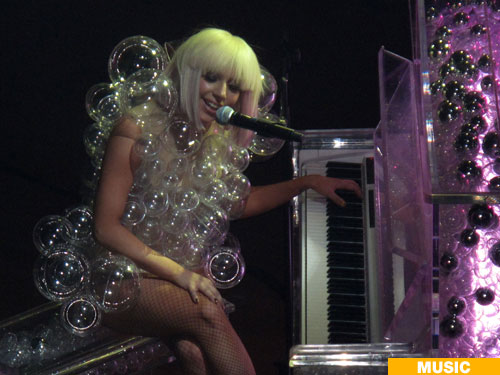
Lady Gaga: From Monster Musician to Marketeer
The biggest question most singer-songwriters ever have to contend with is when and how they will get signed to a major record label. For Lady Gaga, however, that was only the start to her already iconic career.
Now that Lady Gaga has already fought and won that battle victoriously, and quickly become the new darling of the entertainment world — potentially, even albeit temporarily taking Madonna’s spotlight — she has reached a new tier — that of a shrewd businesswoman, chiefly engaged in the endorsement and design of various products.
Arguably, in order for Gaga to have ever reached this upper echelon in celebrity status, she would have had to be a marketing genius all along. But regardless of who got her to this point, her most important issue now is whether she can stay there. And therein lies the balance between popular musician and smart salesperson. Lady Gaga’s talent (along with a few others) can and will be argued, but if she knows how to market herself, she will have no issues propelling her career further, or at least maintaining it.
And so far she seems to be doing a pretty damn good job of it. While other entertainment figures slap their name on the predictable flowery perfume or cosmetics line — Gaga seems to choose her endorsement deals just as wisely as her inimitable outfits. Whether she’s designing them or not, they have so far been boundary-pushing products in the worlds of technology and fashion, exactly the same image she has been trying to portray for the past two years. This is precisely why it is working for her. Because her collaborations align with the image she is trying to sell of herself.
Let’s take a look at exactly the products to which she has chosen to sign her name.
Last January, Lady Gaga helped to design Monster’s new Heartbeats by Lady Gaga High-Performance In-Ear Headphones. In one fell swoop, Lady Gaga brilliantly dotted her i’s and crossed her t’s on a product that only expanded her image. For one, she not only teamed up with a leader in audio/video accessories, but one that shared the same name as her new song at the time, “Monster,” from “The Fame Monster,” which she then began to use (at least for the time being) as the new moniker for her beloved fans. Hence, making her fans feel even more of a part of her image, and needing to buy her headphones that share the same title as them.
Next, what better product to collaborate on than one that enhances the audio experience of others and gives the public another way to hear your music, in addition to a fashion-forward electronic product? In addition to looking cool, the Heartbeats headphones boasted loud, high-performance sound without distortion; extreme clarity and deep bass; and a design that reduces external noise. And lastly, when these Heartbeats headphones were released, the company teamed up with (RED) to support AIDS programs in Africa — not only helping Lady Gaga build her charitable image, but also aligning with a charity that is near and dear to the hearts of the LGBT community, one of her biggest allies and supporters.
Shortly thereafter, Lady Gaga lent her name to a new line of lipstick, Viva Glam, by MAC Cosmetics, another brand innovator, which donated proceeds to once again fight HIV and AIDS. Not only was Gaga able to “buy” herself more publicity time, but through her efforts, she was able to team up with Cyndi Lauper, another groundbreaking musician with whom she has been compared. In addition, she once again collaborated on a product that was fashion-forward and unique, but which backed an important message.
And most recently, in quite possibly her biggest and most ingenious synergy yet, a year following Gaga being named as Polaroid’s Creative Director, she joined with Polaroid to announce the brand’s new Grey Label, a line of three state-of-the-art gadgets that merge fashion and technology. The Grey Label includes an instant digital camera with built-in-printer, an instant mobile printer and in what could be the epitome of a Gaga design collaboration, camera sunglasses.
Polaroid Camera Sunglasses
So why can Gaga get away with launching or endorsing new products, when other celebrities flop?
“I think that when a celebrity chooses to collaborate with a major company to create a product, they do so in an effort to create something relevant to their image,” says Stephen Lucin of Intercontinental Style, a PR consulting firm. “I think Lady Gaga is doing it here with Polaroid. She has, in the past, worn trendy glasses consistent now with the idea of photo-capable sunglasses.
“In regard to other celebrities, I think only a handful have succeeding in creating products consistent with their image or their fan base. It’s important for a celebrity to think, ‘How is this product consistent with my image, talent or profession?’ Those who can figure that out are the ones who are sure to succeed. And Lady Gaga is one of those celebrities. These soon-to-be released products are consistent with both her image and her persona.”
The main question to be asked is whether Lady Gaga can and will be able to continue these types of joint ventures, and just how many she can successfully launch without over-saturating the market with endorsement deals. The public’s attention span is pretty limited, and they seem to only remember your last endeavor. So she needs to be careful not to taint her image with even one bad deal, or else she starts all over again. But there’s no question she has the marketing talent in her, and that will surely keep her successful in the public eye.
“I consider myself to be a visionary, not just a songwriter and a singer. I am an artist,” said Lady Gaga. “I brought my vision and love of fashion, technology and obsession with the future into all of my work with Polaroid.” I think that about says it all.
Starbucks’ New Logo: Branding Blunder or Genius Maneuver?
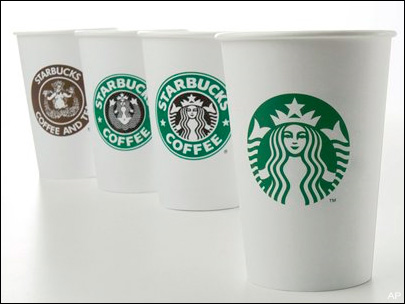
This week, coffee titan Starbucks did something it hasn’t done since 1992. It changed its logo. But that wasn’t the biggest story. The biggest story was that the brand removed its trademark “Starbucks Coffee” wordmark that has encircled the centerpiece of the logo — a siren — since 1971.
My first thought was: “This was a very wrong move for Starbucks. They have just wrecked their iconic image — one that they have been building steadily for the past couple of decades.” I questioned whether anyone would be able to tell that this new logo represented Starbucks, and more importantly, that they would even recognize it.
Now, don’t get me wrong. I realize that one of the truly significant leaps a brand can make is to move to a wordless logo. But even more so, I realize that in order to do so, a brand has to be ready — meaning, the public has to be ready to embrace this logo. Apple has done it successfully. They have built a culture around their trademark white apple logo. But that’s because the company’s name is an apple. The same goes for Target. But, how does a siren represent Starbucks Coffee?
Surprisingly, when I polled a random sample of 20 people, much to my chagrin, all were able to recognize it as Starbucks. Even more surprisingly, although they recognized it, they were also fairly confused as to why it was done and still were unsure of how this siren represented the brand.
“I personally think that on its own, it looks just a tad odd – perhaps because I’m so used to how it is at the moment, and we can’t assume that areas less populated by Starbucks will automatically recognize the logo as well as those in large cities or in Seattle.” said Raven Harrell, an interactive media and web designer from Seattle. “On the other hand, I give Starbucks props for taking a step towards a wordless logo.”
Robert Padbury, director of design and user experience for Stipple Inc., agreed: “I think this is a great move. I don’t think that having the words “Starbucks Coffee” surrounding the logo is necessary anymore, because Starbucks is such a ubiquitous brand. I also think this will help the image of Starbucks, because the logo now stands on it’s own, resulting in a much more powerful presentation.”
But Jason Frazier, the owner of Jason Frazier Creative Design, countered that: “I don’t know that the refresh was necessarily a ‘smart’ move – or that it’s necessarily a move ‘forward.’ … I’m not too fond of the new look, but my main issue with it is aesthetic: it’s looks somewhat unfinished and containing less depth — almost like clip-art. The original felt very solid, and the fact that it contained the company name, to me, is what helps makes the more powerful statement.”
Whatever the case is, the general consensus seems to be one of acceptance, but not one of loving embrace. Starbucks’ reason for its logo change was to get away from being seen as a coffee brand, and to expand a bit more on its products and culture. Yet, one of the essential elements to smart marketing is never to spread your brand’s image too thin by expanding too far and losing sight of what made your brand iconic in the first place — in this case, coffee.
What will remain to be seen is just how this new expansion will affect Starbucks’ branding. It’s completely bold and daring, considering Starbucks is known as the juggernaut of coffeehouses, but it could just work if the brand’s marketing department is smart and play their cards right.
What do you think of Starbucks’ new logo change?